


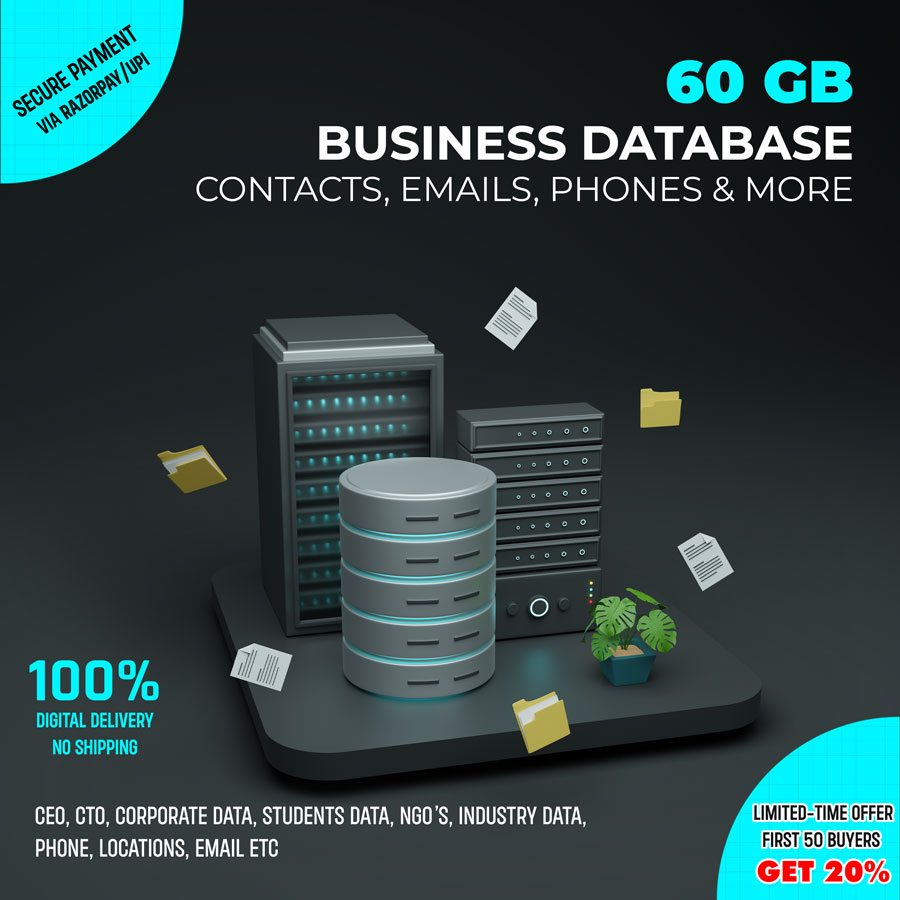
Finding the right prospects is one of the biggest challenges for businesses, sales teams, digital marketing agencies, and service providers. Instead of spending hours collecting contacts from multiple sources, businesses can use a structured business data solution to identify relevant audiences, segment prospects, and plan more focused marketing campaigns.
The 60 GB Premium Business Data package from GyaanInfo is positioned as a broad business database resource for companies looking to support lead generation, B2B prospecting, customer research, and industry-focused outreach. It includes multiple categories covering professionals, companies, consumers, students, online shoppers, service providers, and industry-specific audiences.
However, business data should always be used responsibly. Before contacting any person, organisations must verify the source, accuracy, permission status, and applicable privacy and communication rules.
What Is Included in the Data Package?
The collection contains a wide range of business and consumer-oriented datasets. These categories may help businesses create separate prospect lists for different products and services.
The listed data includes:
- Online shoppers and e-commerce audiences.
- Business owners, corporate companies, SMEs, and professionals.
- Doctors, hospitals, nurses, clinics, chemists, and medical representatives.
- Schools, colleges, universities, teachers, tutors, lecturers, and principals.
- Advocates, lawyers, legal firms, chartered accountants, and consultants.
- Architects, interior designers, civil engineers, graphic designers, and photographers.
- CEOs, CFOs, CTOs, CMOs, general managers, HR professionals, and senior executives.
- Manufacturers, exporters, importers, suppliers, dealers, and distributors.
- Real estate companies, property dealers, contractors, and building-material businesses.
- Hotels, restaurants, travel agencies, transport providers, and leisure businesses.
- IT companies, software engineers, telecom professionals, and web development companies.
- Retail shops, supermarkets, malls, apparel stores, jewellery shops, and furniture businesses.
- Financial professionals, stock traders, mutual fund audiences, policy-related records, and business analysts.
- Students, working professionals, senior citizens, and other demographic groups.
- Online sellers, website owners, social media users, and technology-related audiences.
The package also lists files in formats such as ZIP archives, Excel workbooks, and other database files. This can be useful for teams that need to organise data using Excel, CRM software, or lead-management platforms.
How Businesses Can Use It
The main value of a large database is not its size alone. Its value comes from how accurately the information can be filtered, verified, and matched with a company’s target audience.
1. B2B lead generation
B2B companies can identify potential business customers based on industry, job role, location, company type, or professional category. For example, a website development agency may focus on business owners, company directors, educational institutions, clinics, consultants, and SMEs.
A targeted list is generally more useful than a large, unfiltered file because sales representatives can create relevant messages for each segment.
2. Industry-specific marketing
A healthcare marketing agency may research medical practices, hospitals, clinics, and healthcare professionals. Similarly, an education company may create separate segments for schools, colleges, tutors, students, and educational institutes.
Industry-based segmentation allows businesses to create dedicated landing pages, email campaigns, brochures, social media advertisements, and follow-up scripts.
3. Local business outreach
Businesses operating in Chennai, Puducherry, Bengaluru, Mumbai, Delhi, or other Indian markets may need location-focused prospecting. Location-based data can help a company identify nearby prospects for services such as website design, SEO, CCTV installation, digital marketing, accounting, training, or business consulting.
The location should always be verified before it is used for campaign targeting.
4. Customer profiling
Online shopper and consumer categories may help businesses understand broad audience segments. A company can compare customer interests, product categories, location, and business requirements before developing an offer.
This information should be treated as a starting point for research rather than as guaranteed customer intent.
5. CRM and sales workflow development
Data can be imported into a CRM after cleaning and validation. A typical workflow may include:
1. Remove duplicate records.
2. Standardise names, phone numbers, email addresses, and company names.
3. Classify leads by industry and location.
4. Add lead source and verification date.
5. Record consent or communication permission.
6. Assign leads to sales staff.
7. Track contact attempts and responses.
8. Remove opt-outs and invalid records.
This process helps businesses improve reporting and avoid repeatedly contacting people who are not interested.